
What Listeners are Saying
Jack bowers: all about Jazz
Https://Www.allaboutjazz.com/It-Could-Happen-To-You-Christine-Fawson-Self-Produced
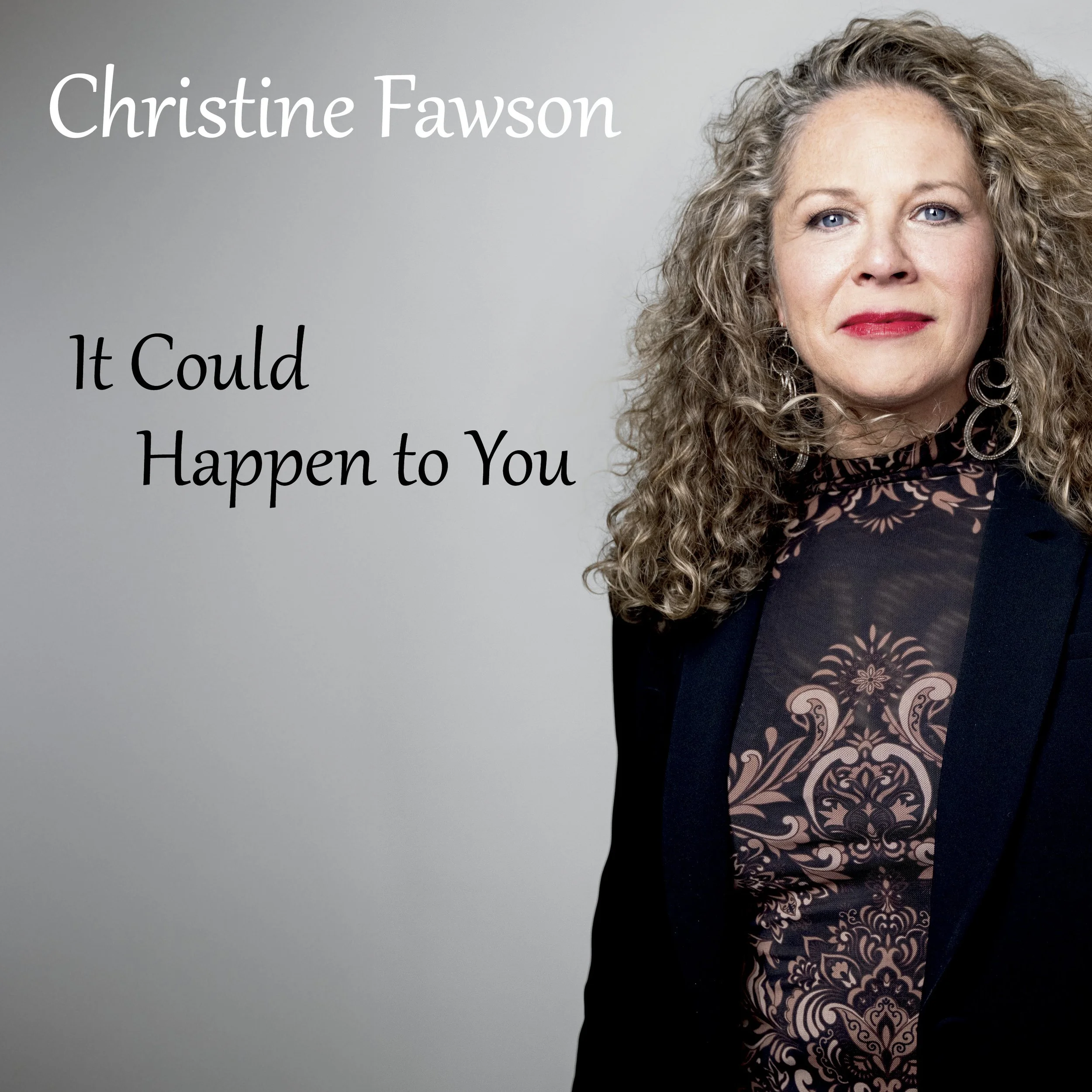
A trumpet player who sings or a singer who plays trumpet? Christine Fawson puts those questions to the test (again) on It Could Happen to You, the fifth recording under her leadership, playing trumpet and singing on every one of the album's 11 carefully-mined selections from the Great American Songbook. The obvious answer is that Fawson is both a trumpet player who sings and a singer who plays trumpet, which would be beside the point if she did not do both so marvelously well.
Many another instrumentalist has decided to widen his or her repertoire by adding a voice to the mix, more often than not with less than salutary results. The same cannot be said of Fawson, who is so impressive in either guise that she could make a decent living as a singer (which she has) or trumpet player (ditto). And should she ever need a backup plan, she is also an educator who taught for 14 years at the Berklee College of Music.
Most of the tunes on It Could Happen to You are well known, as are their authors, who include Cole Porter, Hoagy Carmichael, Irving Berlin, Rodgers, Hart, and the Gershwin brothers. Fawson sings them basically as written, using rhythmic changes and occasional scatting (as well as the trumpet, often muted) for variety. She is aided and abetted by a blue-chip rhythm section: pianist Tim Ray, bassist Dave Zinno and drummer Casey Scheuerell, each of whom is pivotal to the album's overall temper and ambience.
Fawson sings the way she plays trumpet: bright as sunlight, always squarely on-key, with an abundance of warmth and personality. Those indispensable traits hold her in good stead throughout, starting with the album's alluring title song, written by Johnny Burke and Jimmy Van Heusen and introduced by Dorothy Lamour in the 1944 film, And the Angels Sing. Fawson gives Porter's "It's All Right with Me" a merry ride, using the proper blend of discretion and come-hither charm, before tackling what may seem an odd choice, Carmichael and Johnny Mercer's easygoing "Lazybones," which works surprisingly well, thanks in part to superb counterpoint by Ray, who then sits in as Fawson's lone accompanist on Berlin's plaintive "What'll I Do."
Fawson comes out scatting on Richard Rodgers and Lorenz Hart's "My Heart Stood Still," then uses the muted trumpet to announce another Burke and Van Heusen classic, "Like Someone in Love," which was introduced by Dinah Shore in 1944 and popularized a year later by Bing Crosby. She sings the seldom-heard verse on Don Raye and Gene DePaul's "You Don't Know What Love Is" before cruising through Ray's surprisingly upbeat arrangement, and wrings the last ounce of earnestness from Carl Fischerand Bill Carey's "You've Changed." A pair of songs by the Gershwin brothers follow, the first a curiously undervalued treasure, "I Was Doing All Right," from the 1938 film The Goldwyn Follies (superb bass solo by Zinno), the second the far better-known "Oh, Lady Be Good" (wherein Fawson, Ray and Scheurell deliver awesome solos). Fawson neatly wraps the package with another of Porter's many masterworks, "Every Time We Say Goodbye."
When it comes to singing, playing trumpet, connecting with her teammates and simply having a wonderful time doing all of the above, Fawson is a tough act to follow, and It Could Happen to You is a clear-cut winner from start to finish.
gordon Jack: Jazz journal
Both as a singer and instrumentalist California-born Christine Fawson offers here a very fresh look at some well-worn songbook material. She studied at the Berklee School of Music, where she ultimately became professor of brass, ear training, harmony and voice. The great Phil Wilson, who played trombone with Woody Herman in the 60s, became her mentor. (Who can forget his outstanding performances on It’s A Lonesome Old Town and the remake of Bijou with the Herman band?)
As a trumpeter Fawson has listened to Lee Morgan, Clifford Brown and Miles Davis among others, and Frank Sinatra’s sound was “captivating” along with Harry Connick Jr who became her “biggest modern influence” as a singer. A thoroughly well-rounded musician, she has worked with the Syncopation Vocal Jazz Ensemble and Sherrie Maricle’s DIVA Orchestra.
It Could Happen To You is an ideal vehicle for her rich contralto voice, which evinces perfect diction and intonation. A nice touch here is the contrafact arranged by Brad Hatfield, who plays piano with the Boston Pops. It features the leader in a cup mute accompanied by Dave Zinno doubling the line with her. The Latin It’s All Right With Mefinds her getting very close to Lee Morgan’s distinctive harmon sound. She arranged My Heart Stood Still and it reminds me of the hip writing that Roy Kral used to provide for Jackie Cain. With her infallible ear she proves here to be an accomplished scat-singer. LikeSomeone In Love is dressed up as a tango which works really well. You Don’t Know What Love Is is taken a little faster than usual and it features Fawson’s glorious open sound. She creates an intimate late-night mood on the lovely You’ve Changed which includes the rarely heard verse. All highly recommended.
Discography
It Could Happen To You; It’s All Right With Me; Lazybones; What’ll I Do; My Heart Stood Still; Like Someone In Love; You Don’t Know What Love is; You’ve Changed; I Was Doing All Right; Oh, Lady Be Good; Every Time We Say Goodbye (50.45)
Fawson (v, t); Tim Ray (p); Dave Zinno (b); Casey Scheuerell (d). Westwood, Massachusetts, 13 & 14 November 2025.
Independent
jw Vibe
https://www.jwvibe.com/single-post/christine-fawson-it-could-happen-to-you
One of the enduring pleasures of jazz is hearing a multi-talented artist take a familiar standard and reveal unexpected emotional colors and improvisational possibilities. Veteran vocalist, trumpeter and scat artist extraordinaire mines this kind of sonic magic throughout It Could Happen To You, a high spirited and often exhilarating collection that showcases both her expressive vocal artistry and bold, adventurous trumpet work – with well-placed touches of surreal scat that propel the project’s creativity into the artistic stratosphere.
Joined by the stellar rhythm section of pianist Tim Ray, bassist Dave Zinno and drummer Casey Scheuerell, Fawson puts her distinctive stamp on classics by Jimmy Van Heusen, Cole Porter, Hoagy Carmichael, Irving Berlin, Rodgers & Hart, Jerome Kern and the Gershwins. Rather than simply revisiting familiar standards, she reshapes them with clever phrasing, spontaneous twists and a joyful sense of musical conversation.
The title track immediately establishes the album’s playful aesthetic, with Fawson’s witty vocal improvisations and soaring high-register flourishes mirrored by bold trumpet excursions. On Cole Porter’s “It’s All Right with Me,” a lengthy, inventive piano solo gives way to a spirited call-and-response exchange between her vocals and muted trumpet, showcasing the easy chemistry between Fawson and Ray. Hoagy Carmichael’s “Lazybones” unfolds as a slow-burning Southern blues tale, its drawling vocal storytelling enhanced by an elegant trumpet-and-piano dialogue.
Fawson reveals a more introspective side on Irving Berlin’s wistful “What’ll I Do,” a graceful duet with Ray that highlights the darker, more vulnerable textures of her voice. Rodgers and Hart’s “My Heart Stood Still” swings with theatrical flair, opening with adventurous scat passages that blur the line between singer and horn player. “Like Someone in Love” rides a bustling New Orleans-flavored groove, featuring one of Fawson’s most explosive and percussive trumpet solos, while “You Don’t Know What Love Is” evolves from tender balladry into an unexpectedly brisk swinger fueled by expressive improvisation.
Throughout the album, Fawson balances emotional depth with infectious energy. The soulful “You’ve Changed” showcases her ballad artistry, while “I Was Doing All Right” charms with jaunty storytelling and buoyant swing. By the time she launches into the whirlwind pace of “Oh, Lady Be Good,” trading rapid-fire scat phrases with her own trumpet lines, the quartet sounds positively airborne.
The closing “Every Time We Say Goodbye” offers a gentle, heartfelt farewell, capping a collection that celebrates both the timeless brilliance of these beloved songs and Fawson’s singular ability to reinvent them. Whether singing, scatting or unleashing a spirited trumpet solo, she approaches every performance with imagination, technical mastery and irresistible joy.
Skope magazine
Christine Fawson Presents 'It Could Happen To You'
https://skopemag.com/2026/06/10/christine-fawson-presents-it-could-happen-to-you
By Skope, June 10, 2026
Christine Fawson’s latest release, “It Could Happen To You” unfolds like a confident portrait of a dual-language jazz artist who sings through the horn and plays through the voice. Across 11 Great American Songbook selections, Fawson moves between warm vocal phrasing, trumpet statements, scat, and conversational small-group improvisation, making the familiar repertoire feel alert and freshly handled.
Thematically the album sits in the classic jazz-standard territory of romance, uncertainty, heartbreak, charm, and farewell. The quartet format keeps the record nimble, and this is highlighted on “Like Someone in Love.” The interplay among the wind instruments carries the track for the most part with Fawson’s vocals weaved in for a light and enjoyable number.
The arrangements are the album’s main creative engine. The title track, “It Could Happen to You,” opens with Fawson’s trumpet before easing into her vocal delivery and solos from piano, trumpet, and bass. “It’s All Right With Me” gives space to both vocal charm and soulful trumpet playing, while “What’ll I Do” strips the texture down to a duet with Tim Ray, allowing the lyric’s loneliness to breathe.
“You Don’t Know What Love Is” seems to be the album’s boldest interpretive turn, moving from ballad feeling into a more surprising arrangement. “Oh, Lady Be Good” sounds like the showpiece: fast, playful, technically assured, and built around Fawson’s ability to blur scat and trumpet phrasing.
Recorded at PBS Studio in Westwood, Massachusetts, and mixed/mastered by Jon Chase, the production on this album is deliberately uncluttered. It favors a live, quartet-forward sound: intimate enough for ballads, clean enough for rhythmic detail, and open enough to let Fawson’s trumpet and voice occupy equal dramatic space.
Most of the songs on It Could Happen To You are deeply familiar, which is why it’s such an achievement that Fawson gives them a reason to be heard again. It approaches the Songbook with respect and ingenuity, and for listeners who enjoy straight-ahead vocal jazz with real instrumental authority, this is a warm, lively, and highly assured release.
George’s Briefs
Christine Fawson; It Could Happen To You
https://www.highstandardsjazz.org
That Great American Songbook is still out there, waiting to be visited by exceptional jazzhip singers like Christine Fawson. Working with a strong piano led trio and her own impressive trumpet entries, Fawson shines on such winners as “It's All Right With Me”, “My Heart Stood Still”, “Oh, Lady Be Good”, and much more. High class from note one.
Self produced; 2026; appx. 53 min.
Making a Scene
Making a Scene
Christine Fawson IT COULD HAPPEN TO YOU
Reviewed by Dee Dee McNeil
https://www.makingascene.org/christine-fawson-it-could-happen-to-you/
Christine Fawson, vocals/trumpet; Tim Ray, piano/arranger; Dave Zinno, bass; Casey Scheuerell, drums/percussion.
Brass albums database
https://www.lastrowmusic.com/it-could-happen-to-you-by-christine-fawson/?utm_source=substack&utm_medium=email#google_vignette
women in jazz playlist
https://www.youtube.com/playlist?list=PLAIwll2RWh7iate1I_CFc19MeuKFP-PvS